Conlony Splits

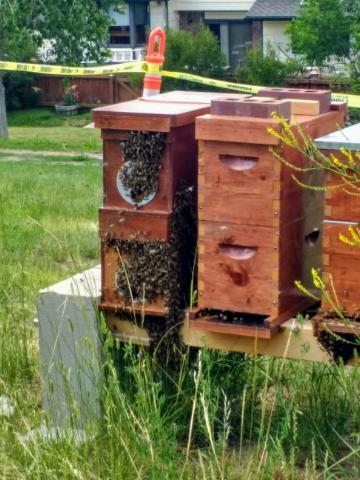
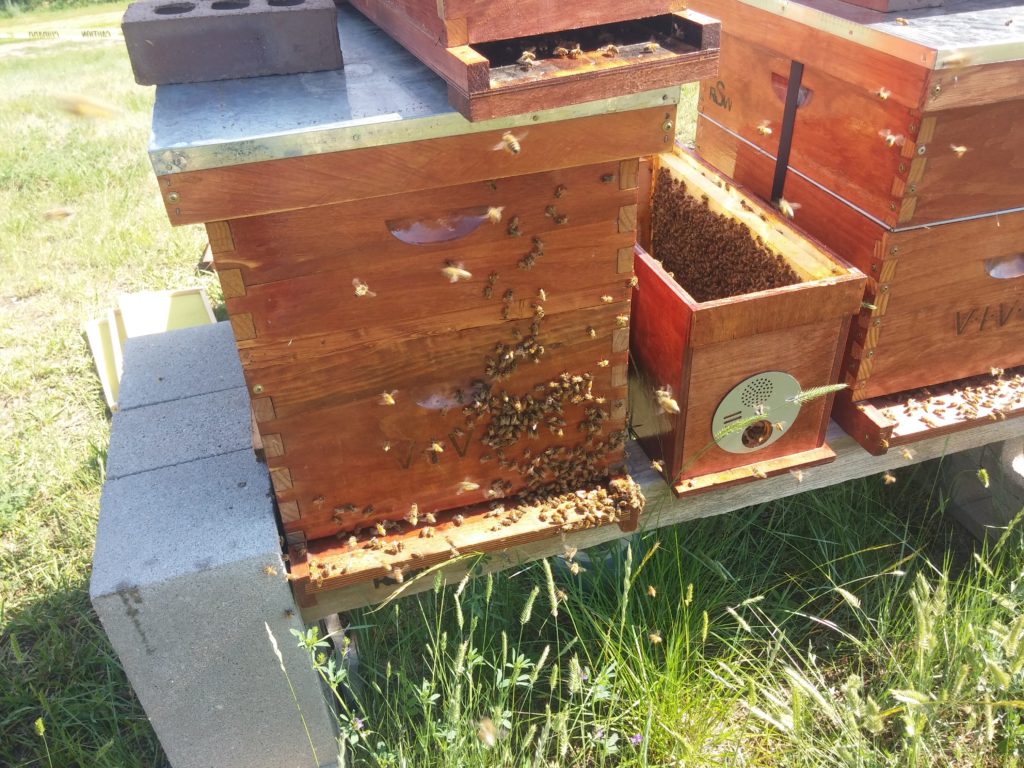
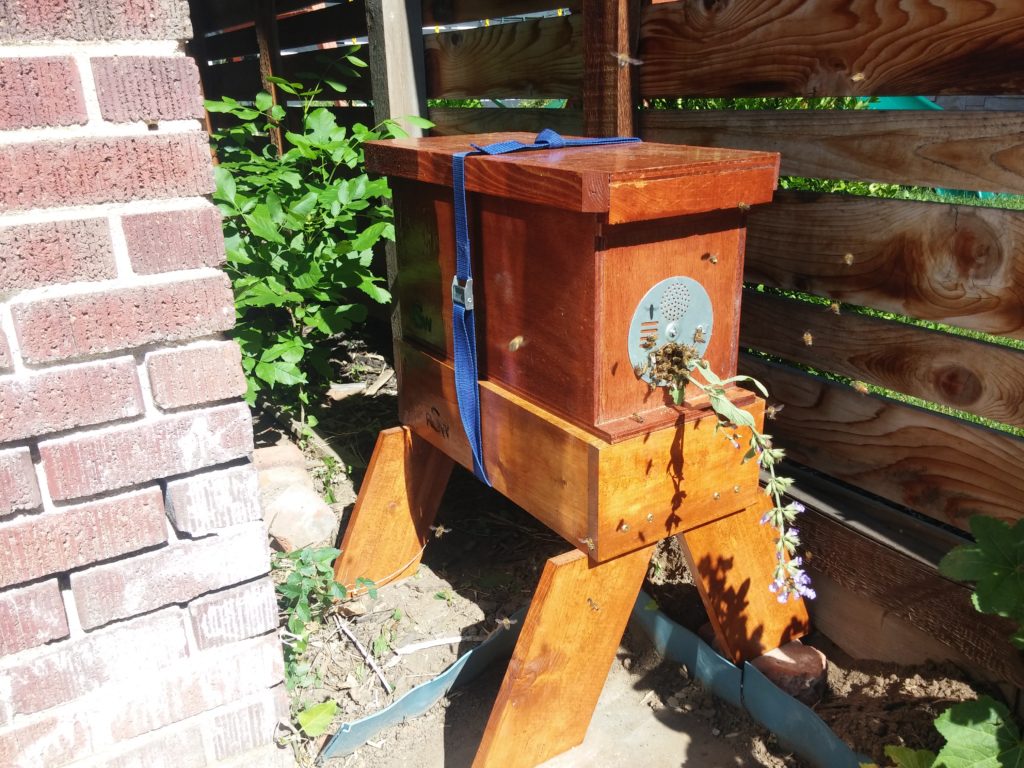
Some rearranging of existing starter colonies and colony splits was performed. The Queen starter colonies were moved around and reconfigured. From Left to Right…The largest of the queen starter colonies was moved into a 3 frame deep box. The queen was caged and the bees moved. 1 resource frame and 1 brood frame was used to start the colony. Another colony was started with a split. The split was started with 1 resource frame and 1 brood frame from the S family foster bee hive. The colony was started in the 3 frame deep box. This colony was given a new caged queen from one of the other queen starter colonies. This queen starter colony was left queenless and should begin a new queen again.
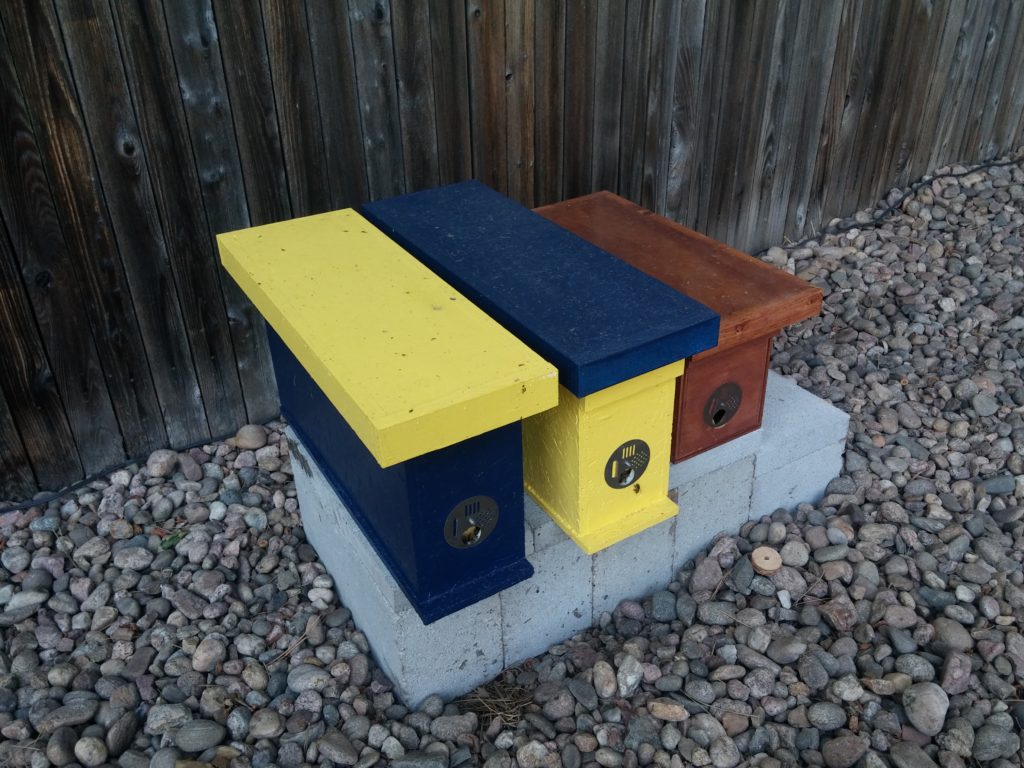
The queen colony that was moved into the Left most 3 frame deep could not take the smaller Warre frames with the transition. Those Warre frames were combined into this larger queen starter colony by moving the interior partitions. This box now contains just one colony. The queen residing in this box is my most aggressive queen from the Wild17 genetics.
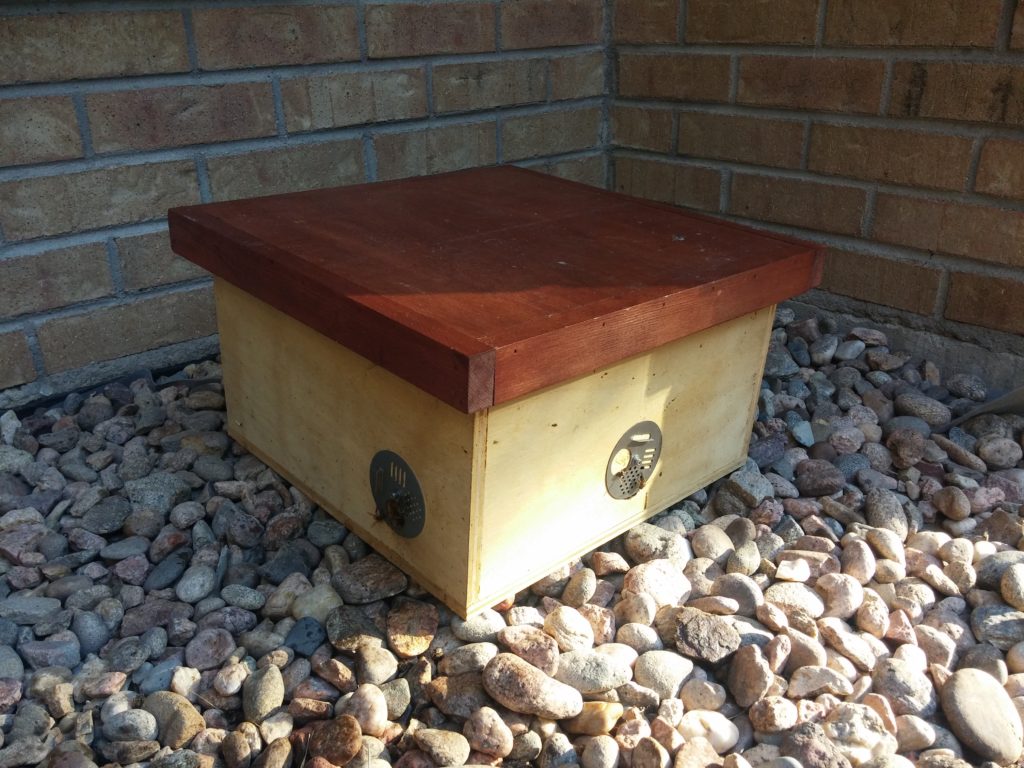
This colony is severely overcrowded and needed a new box. A new box was quickly created. Also 2 frames were removed to start the 3 frame deep boxes.
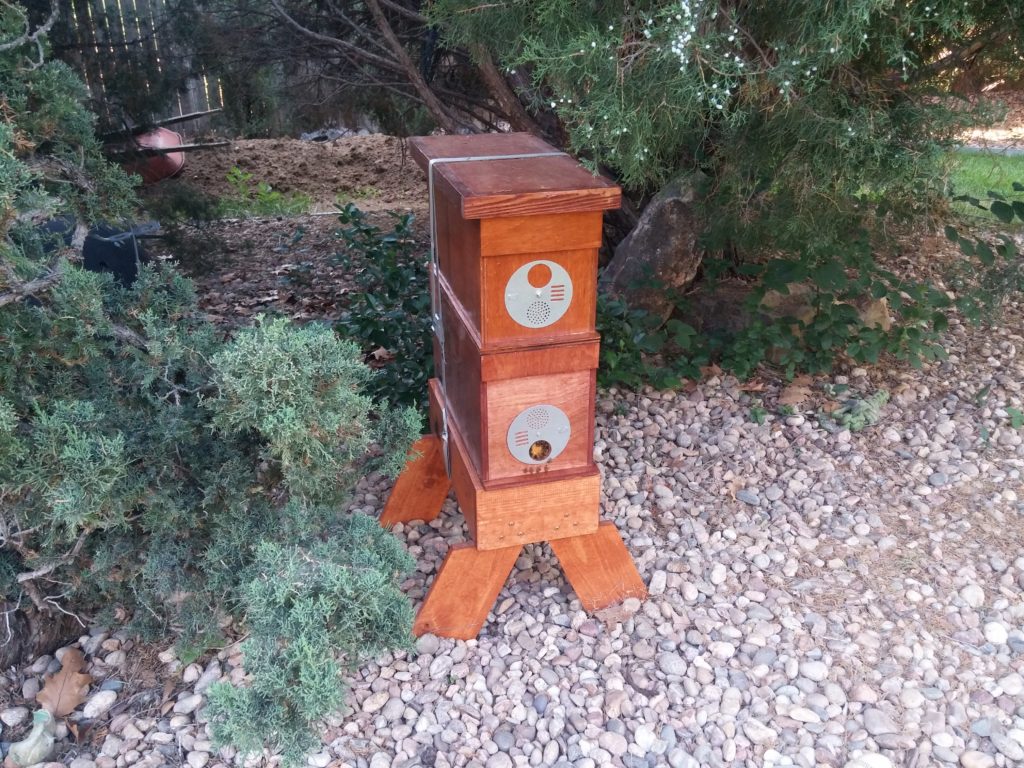
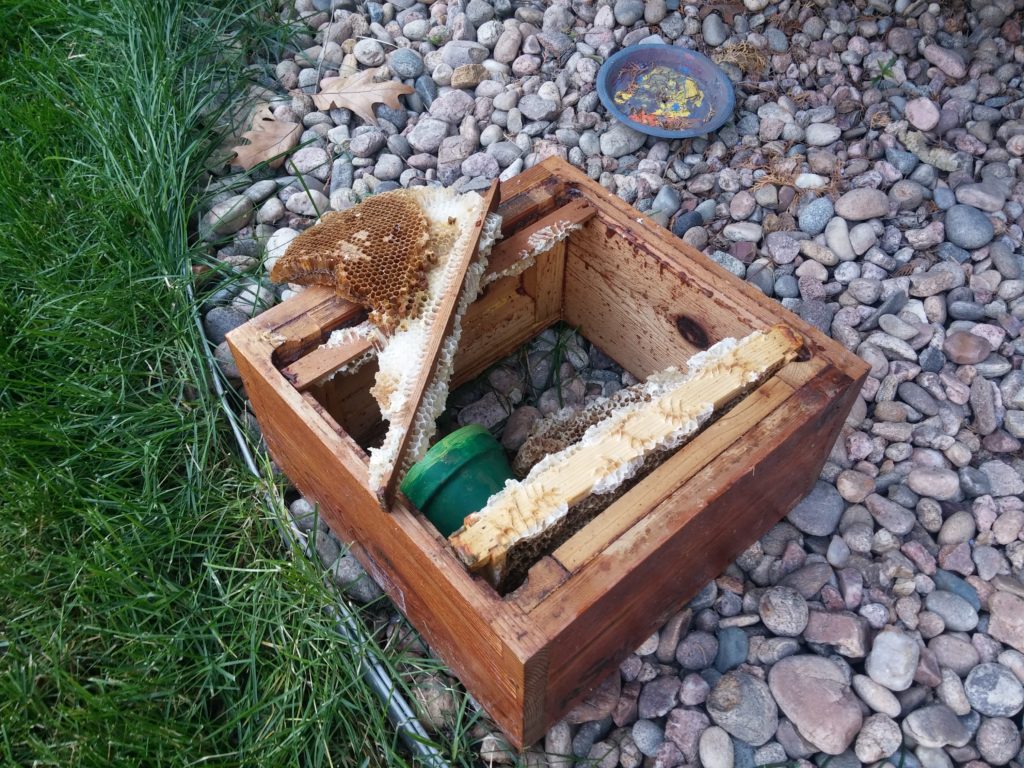
All remaining frames that could not be transferred into the larger Warre Queen starter box were left out and feed back to the bees. Note: even if there are no other options, DO NOT use the top bar frames.
Hive Inspection

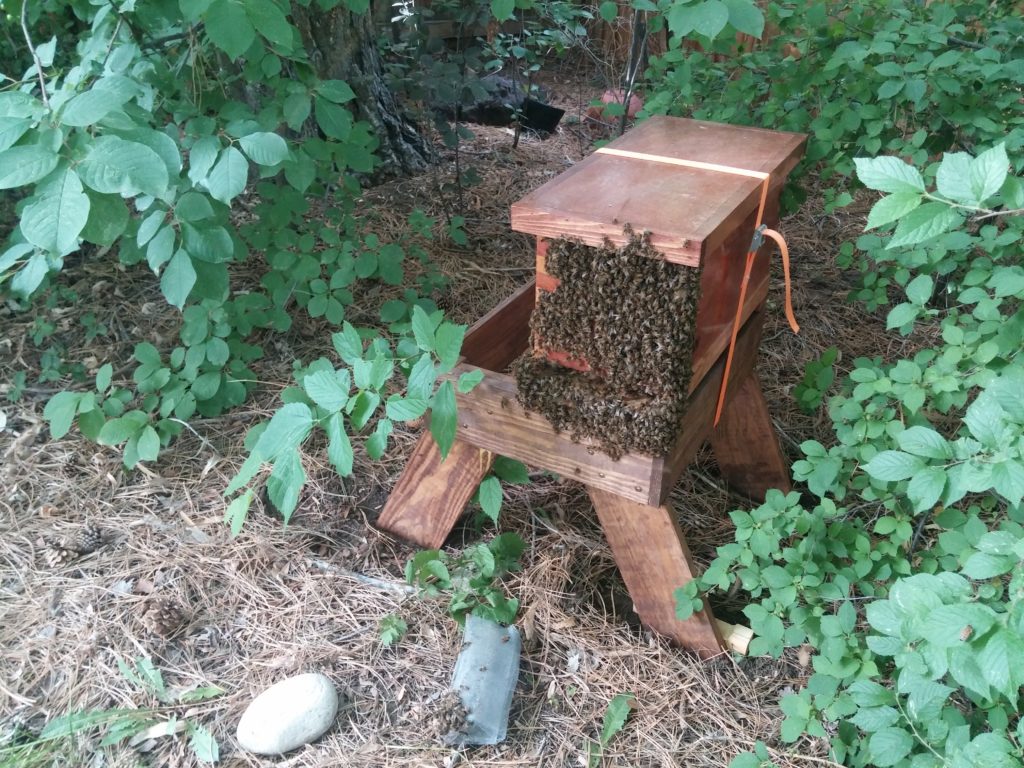
All hives were visually inspection upon my return the Denver from vacation. All hives appear to be in excellent condition. Several hives are showing bearding activity in the hot summer days. Even into the night some hives are simply overcrowded and do not have enough room. The colony populations will begin to decline in the next 6 weeks. I do not plan to increase the size of the hives at this point.

Mite Treatment

All berm hives except for the hive with circular opening were treated for mites with Oxalic acid for 10 minutes.

Honey Harvest

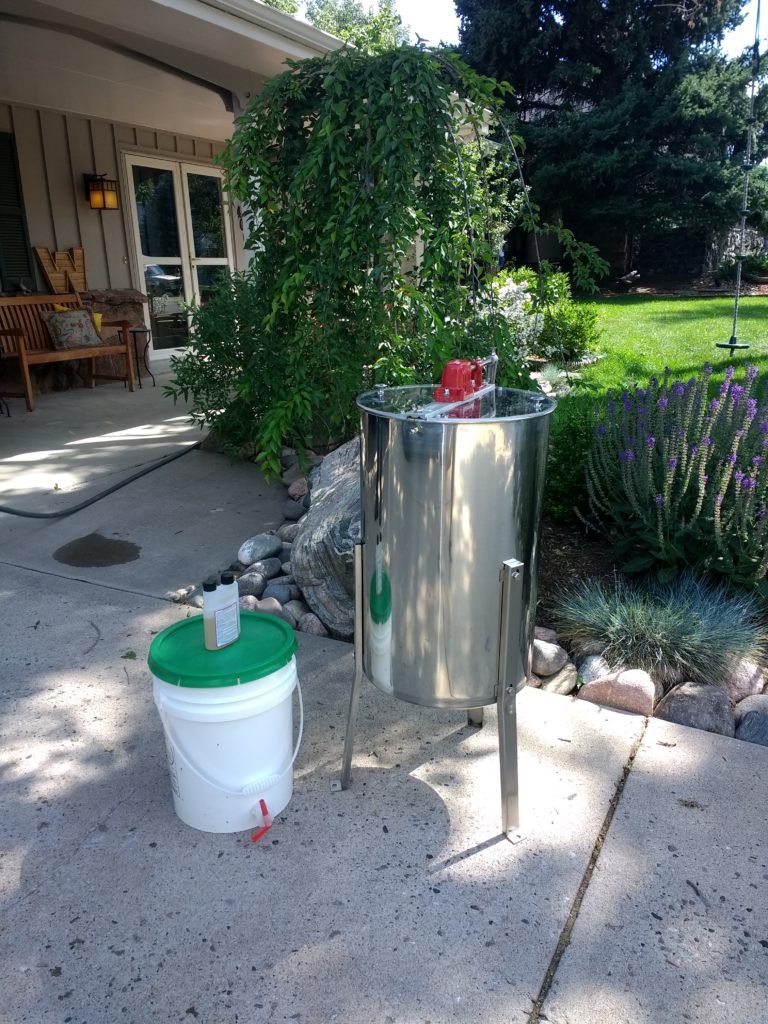
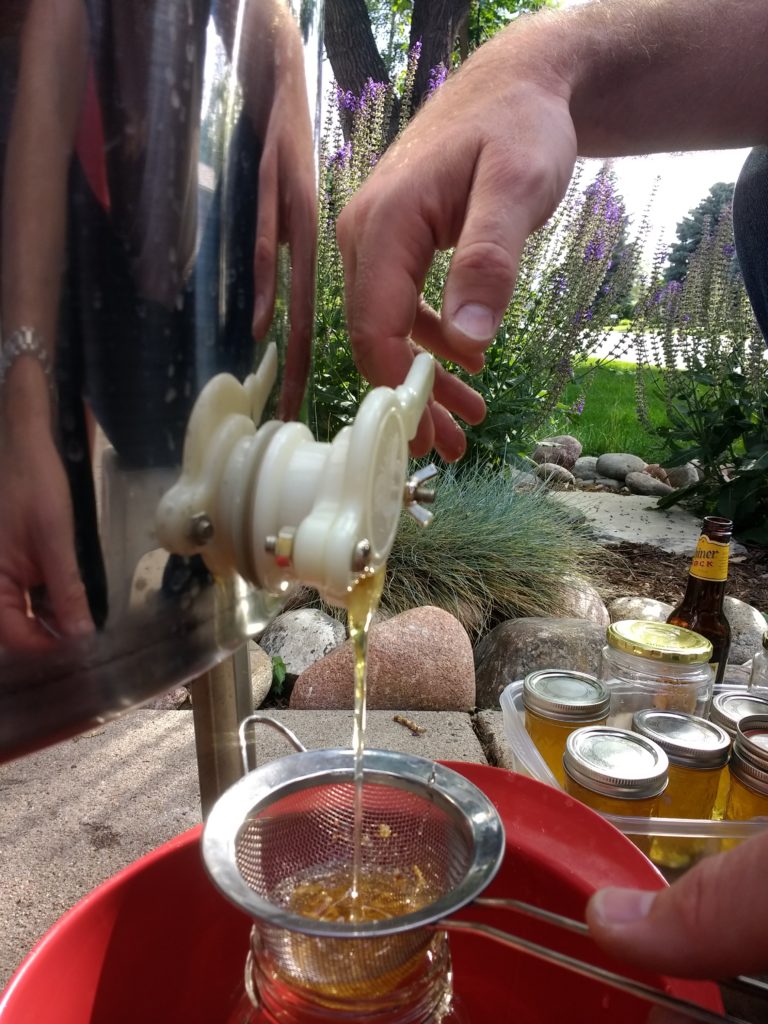
I pulled one Warre box off of the WildCA18A mother colony. This box was completely full of solid capped honey frames. No brood at all. I processed the frames using the hew honey spinner. The intact frames were returned to the box. However the box of frames was added to a different colony. The box was added to the now severely overcrowded neighboring hive.

Hive Split

One of the WildCA18 swarm colonies was showing some significant overcrowding problems. I opened the hive and was greeted with a box packed full of bees and most of the foragers were out already. So this box is full and we need to do something now. I removed 3 frames and added those to a new 5 Nuc box. I took this queen less colony back to my house and introduced a queen. The queen was caged and will be released in 24 hours.

Hive Inspection

Officer Ed’s hive was opened and inspected. Eggs and larva were seen. The colony has expanded to approximately 5 frames. I would expect a huge growth in the next round of brood. Next inspection should be in 3 weeks. The bottom box should be full of bees. Otherwise we may have a problem with this new colony overwintering.

Hive Inspections

All campus hives show normal activity. Not all hives were opened. The Carniolan hive shows normal queen activity. The Wild17 re-queen is going just fine. The WildCA18B colony has eggs.

Hive Building

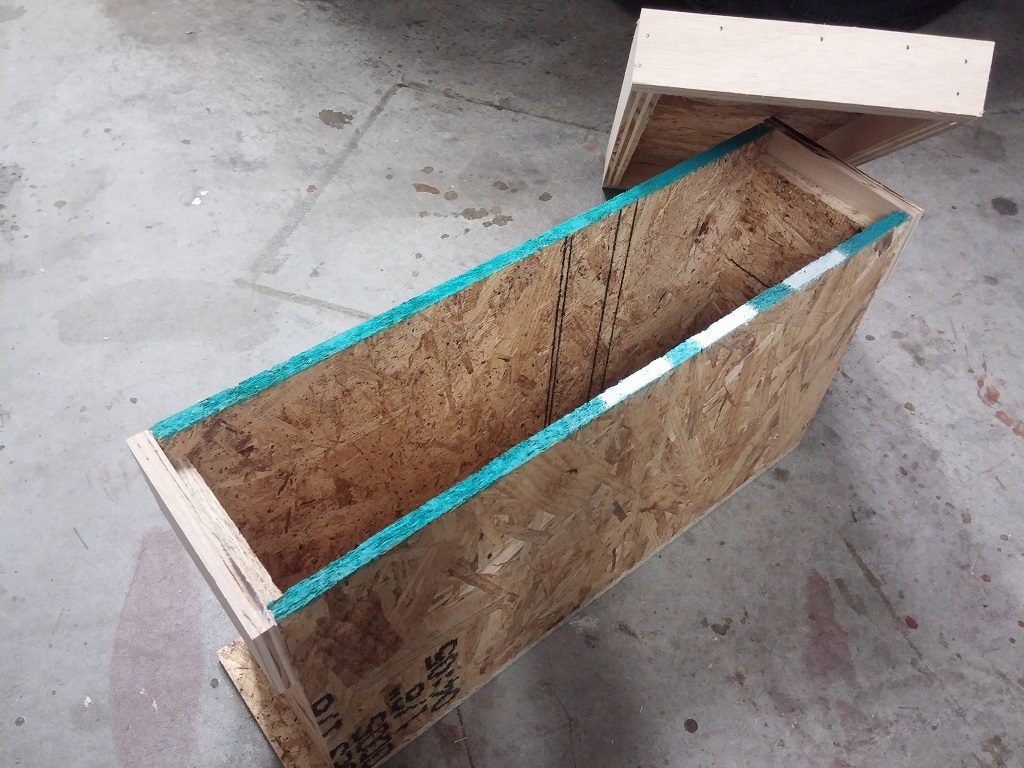
I spent some time using some old OSB sheathing to build 3 frame queen rearing boxes. These are Langstroth deep frame boxes which should be good for rearing queens next year. However, OSB board is extremely difficult to use and not worth the time. These boxes are so fragile and vulnerable to water that they are almost useless. I will need to spend a huge amount of time and material coating the OSB with paint to protect the material.

Foster Bee Homes

Both wild nuc colonies were opened today at their respective foster bee homes. The smaller nuc colony which was just started the week prior was very calm and normal during the opening. Probably because they did not have many numbers inside the hive body and thus had lesser internal temperature to cope with.

The other colony which was opened in the evening was extremely mobile and wanted out of the hive body immediately. This would also explain the tremendous amount of fanning which could be heard from this colony. Next time we shut them up for 3 days, we should provide more ventilation. The wire screen across the opening was not enough air flow.