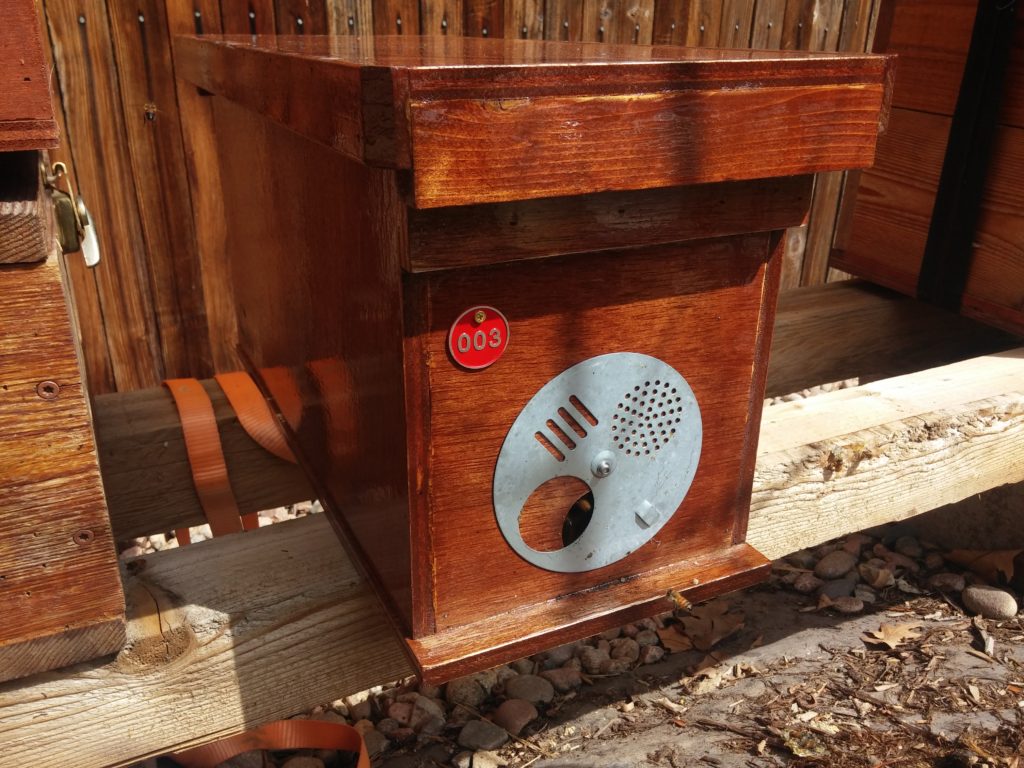
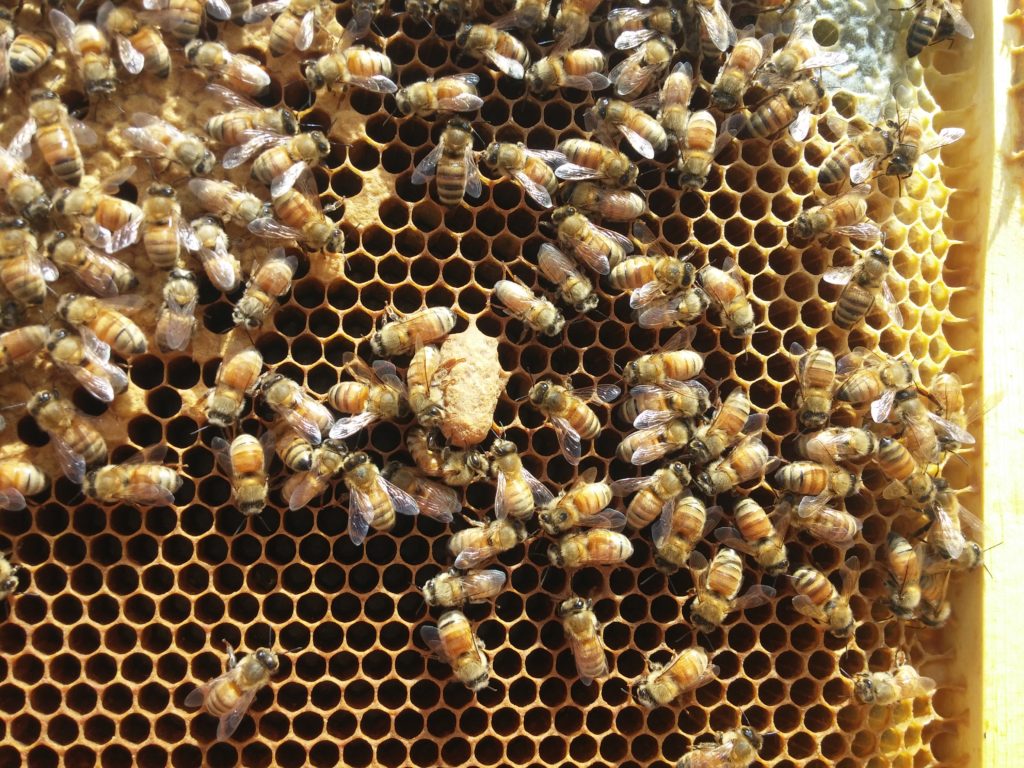
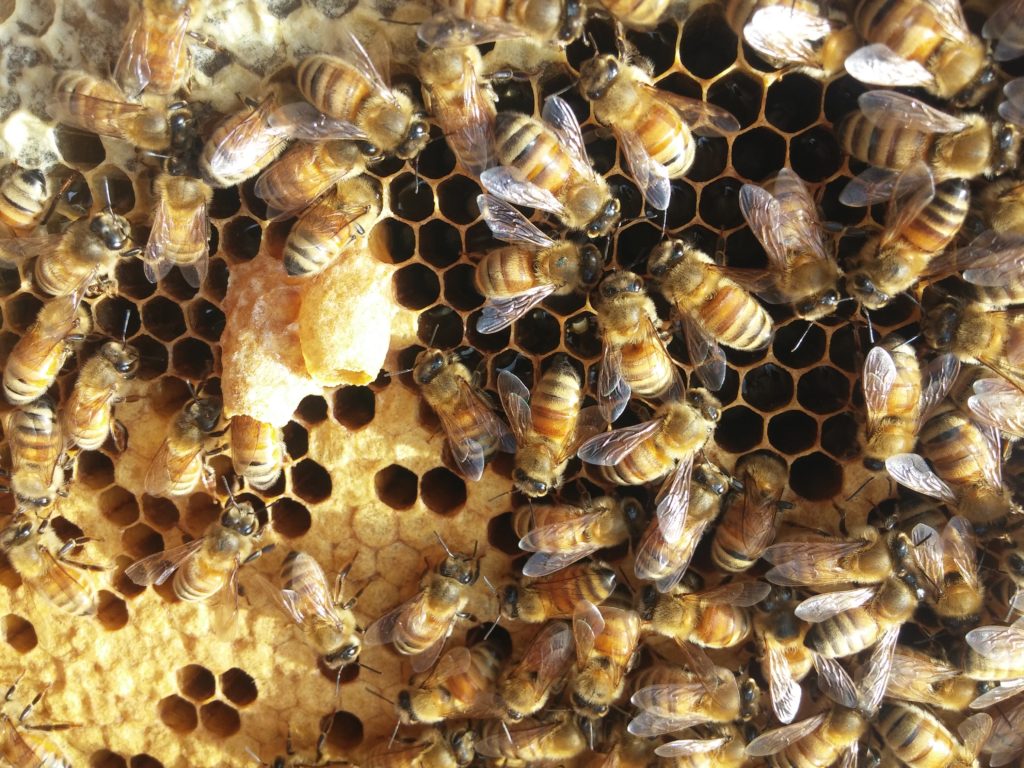
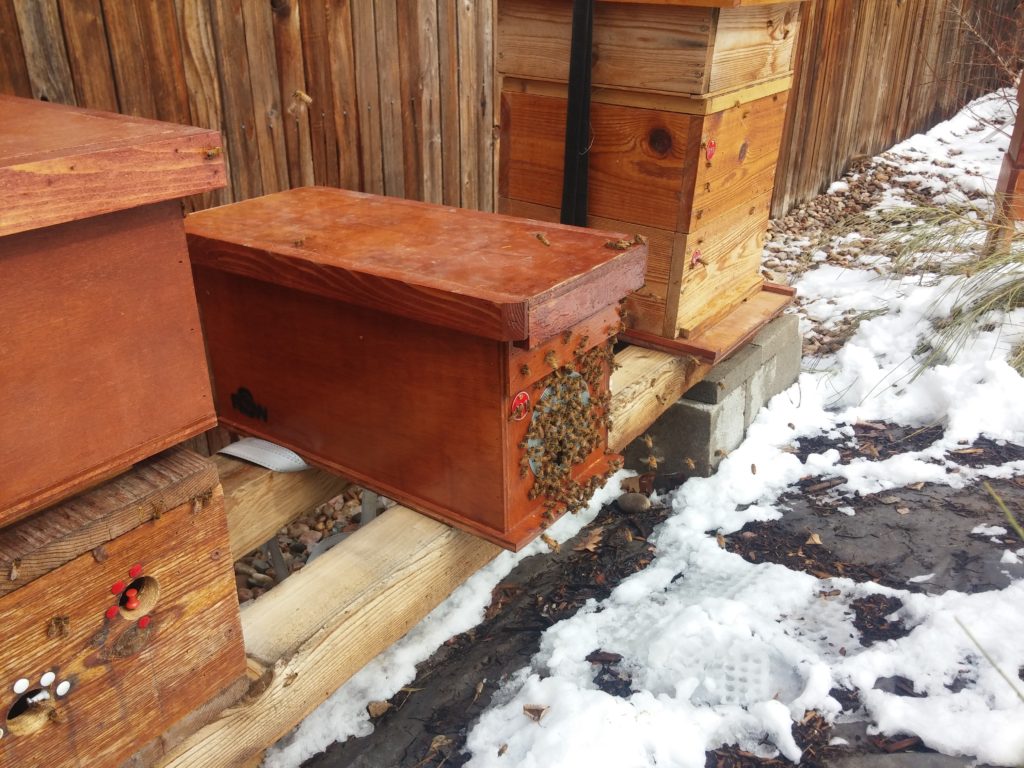
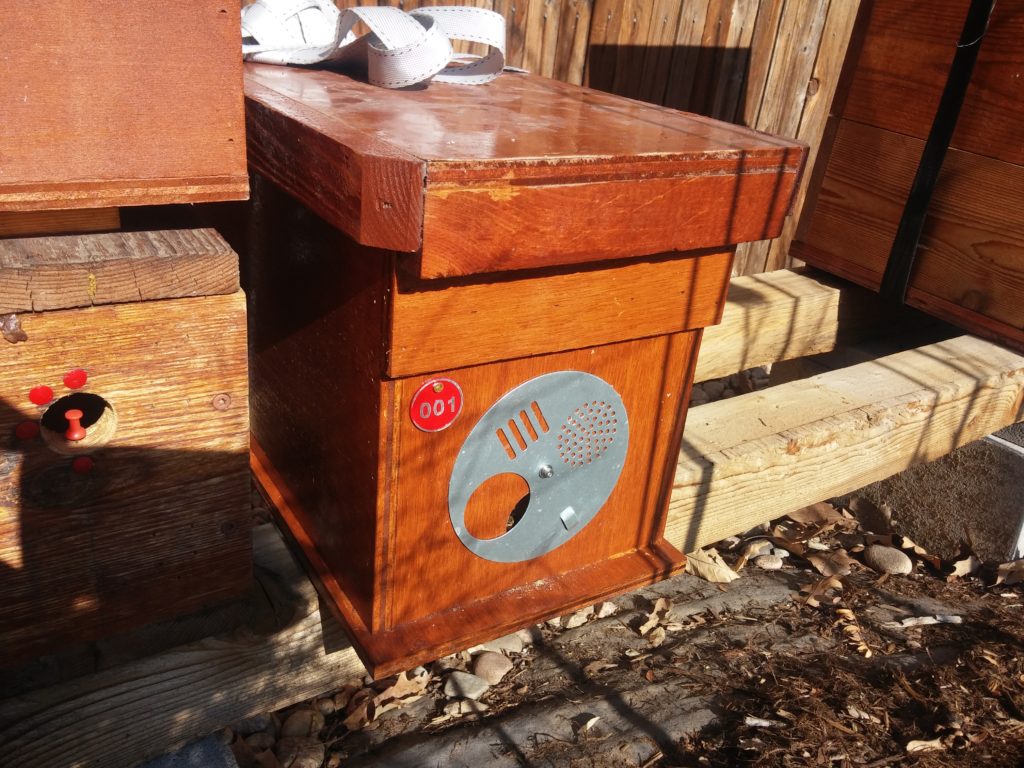
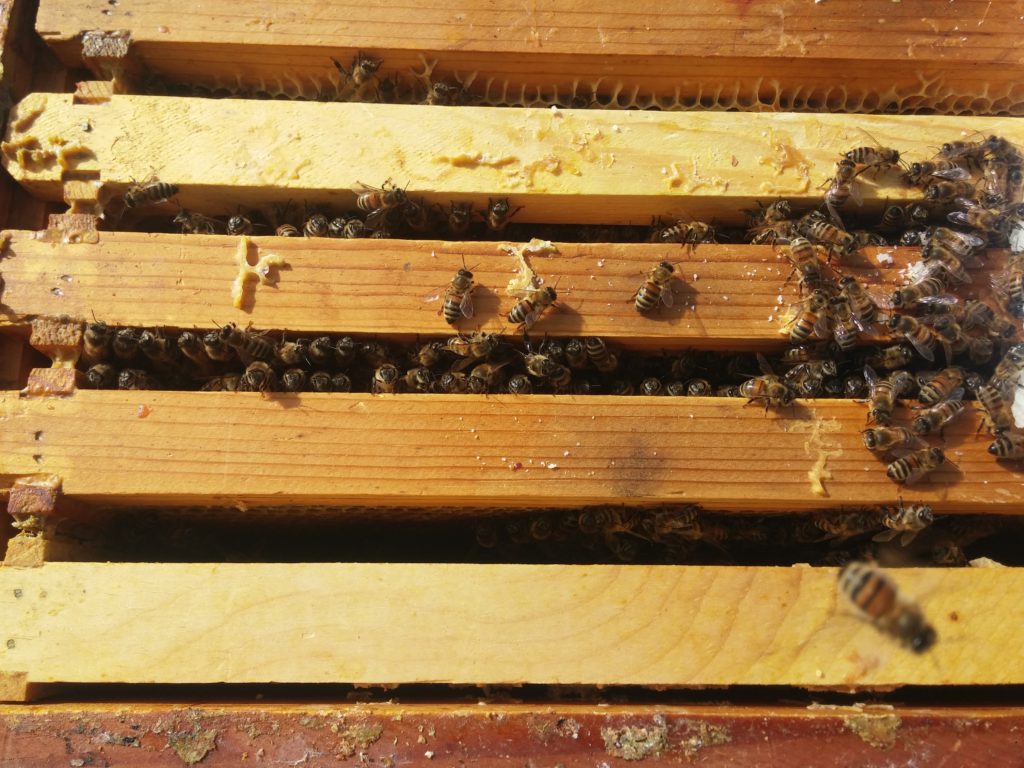
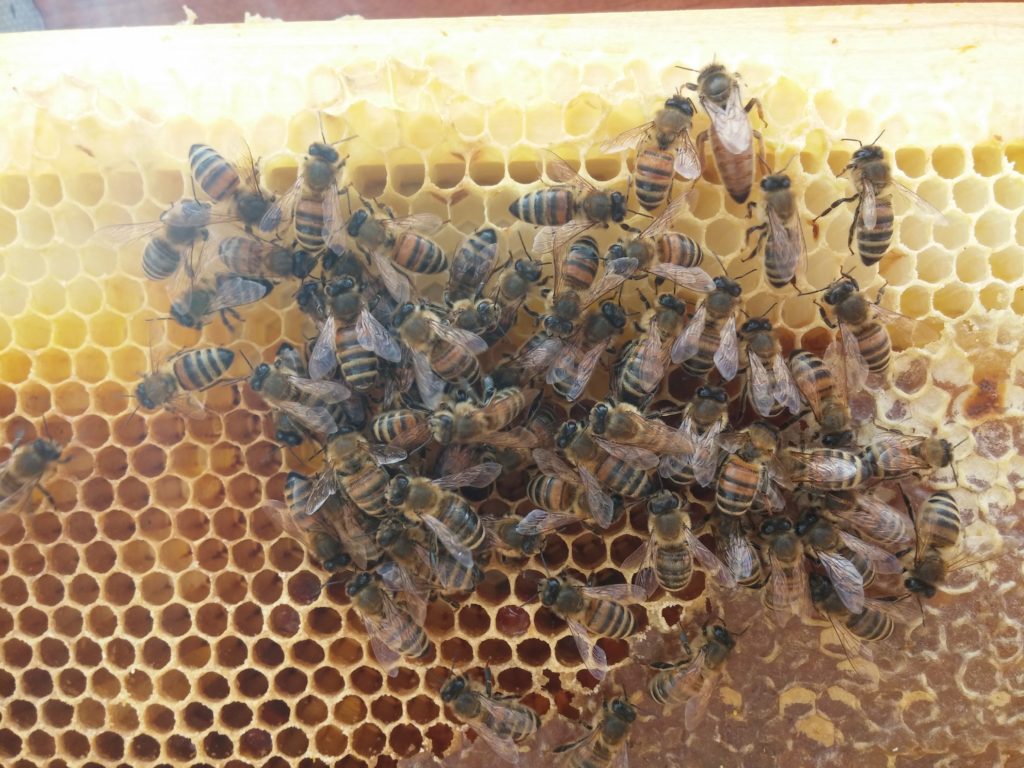
Mother Colony (28-29) was opened and checked for new eggs. All empty frames from last weeks split were now full again with eggs and larva. 2 frames were removed from the mother colony and placed into a 5 frame Nuc (003). Mother colony still has 3 frames of almost solid brood and larva to stabilize with. New split (003) was moved to the Niagara property.
Split (001) was moved to the Corona property along side the mother colony.
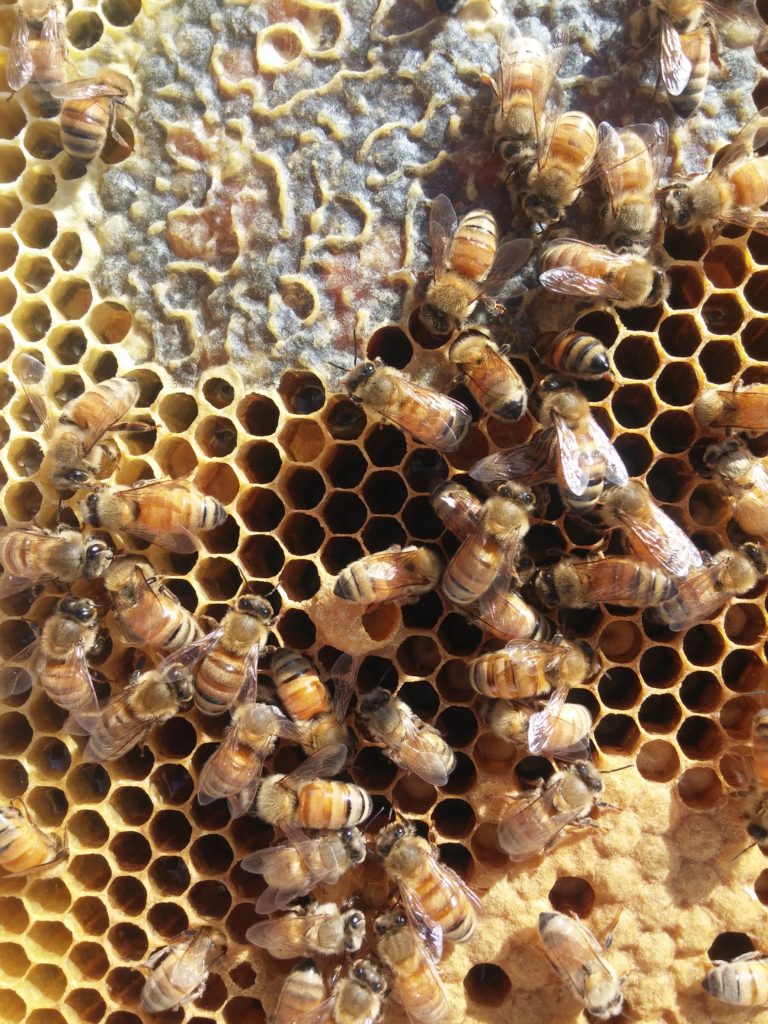
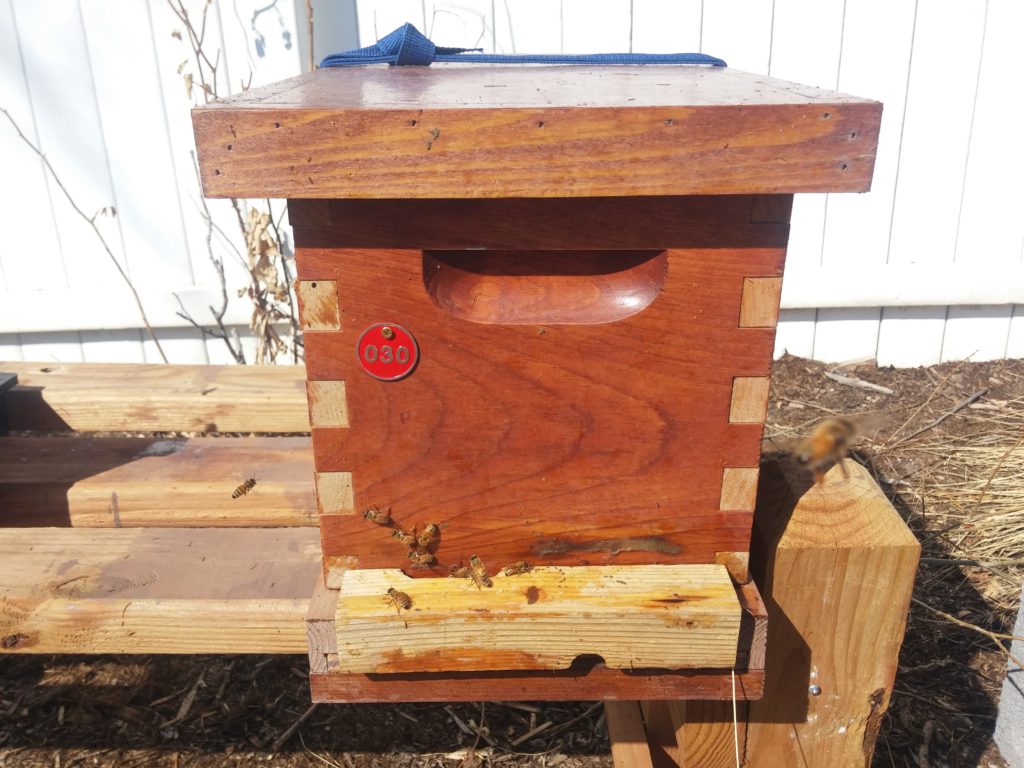
Split (030) was opened and checked for queen cell progress. The queen cell is now capped and the queen should be emerging in the next few days. This split is about 5 days behind the normal expected queen cell timeline. A few numbers of the brood in this split were killed by cold temperatures. It is my fear that this queen cell may too have been damaged by the cold weather. I will check the cell for a hatched queen in 4 days. If no queen has emerged, then we will reseed with a new frame of eggs.
Colony Split (01), Mother Colony(28-29), was opened and checked for queen cells. The colony was split one week ago on 03-14. Three queen cells were found. No more inspections will be performed until later in development cycle. Hive should be moved soon to appropriate breeding yard.
Colony Split (30), Mother Colony(28-29), was checked for queen cells. Colony was started one week prior on 03-07. Only one queen cells was found. No more inspections will be performed until further along in development cycle. Hive is located next to mother colony.
Mother Colony (28-29) was split with 2 frames of brood and 3 resource frames from other died off colonies was created. This new queen-less colony (01) was moved over to the Niagara property.
Mother Colony (28-29) is packed full of bees. We decided to begin making splits early. 3 frames of brood and open eggs were taken with 2 frames of resources into a 5 frame NUC (30).
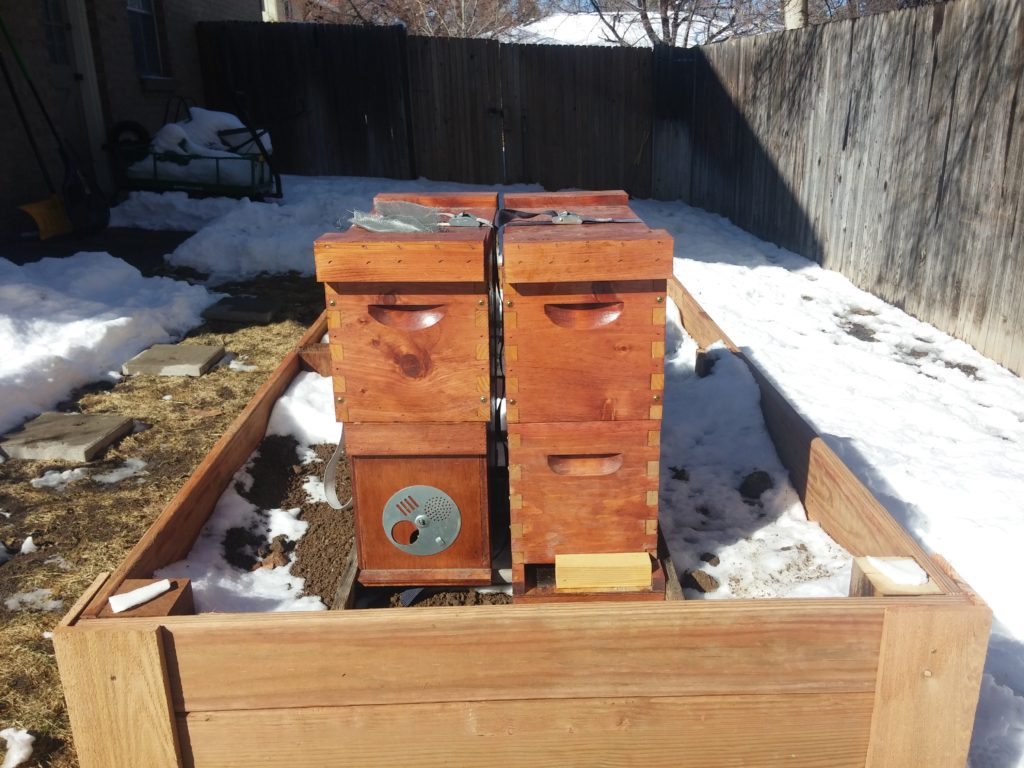
Total number of viable colonies has now been reduced to 6. All colonies on the campus berm have perished. I am now considering moving the hive stands from the berm to a less exposed area. We lost all 7 colonies which were located on the berm. A new location is most certainly warranted.
The colony at officer Ed’s property and the polk building property are still viable and very healthy.
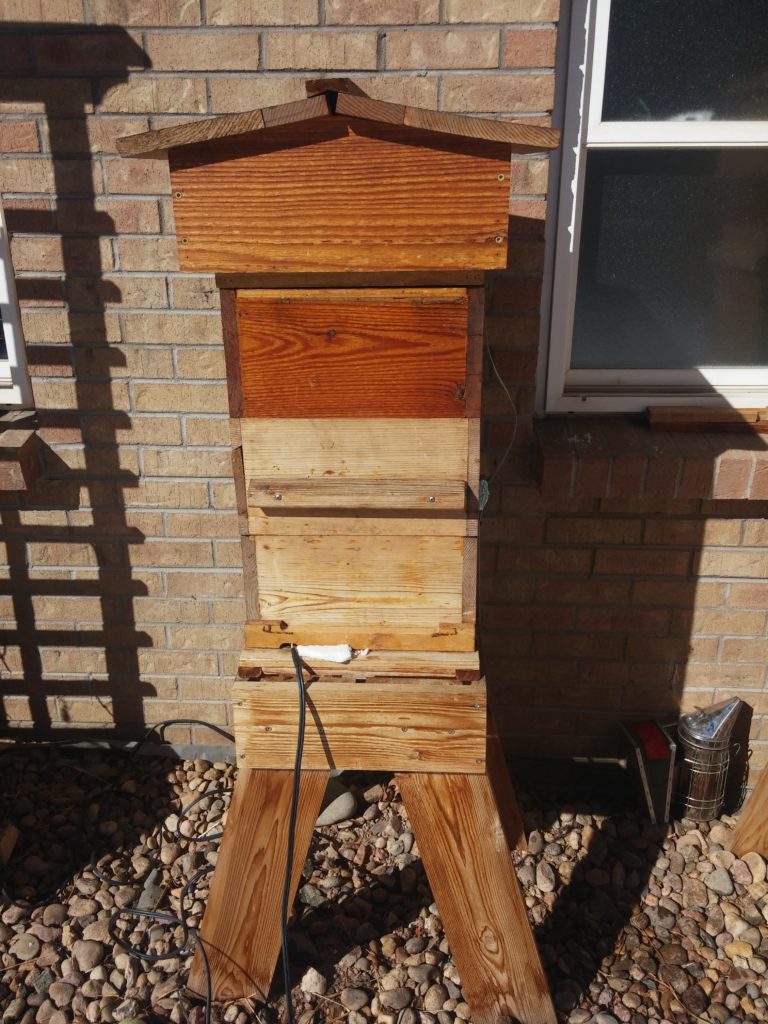
We also lost one of the Warre hives at the Niagara property. This loss was a complicated one. I learned a few lessons from this problem.
I opened the hive on a nice day and suddenly discovered that this colony was extremely weak on the very edge of collapse. I could immediately see the queen and that she had been laying eggs. However there were only approximately 45 worker bees with her. One more cold evening and the colony would have certainly failed.
I caged the queen and moved her and the workers to a 3 frame Nuc box. I took one frame of brood and nurse bees from a stronger hive and combined them. I then smoked the box extensively. There was a problem though. The candy plug I put into the queen cage was not secured. The queen escaped prematurely and I found here being attacked and balled about 15 minutes later. I rescued the queen and caged the queen again and checked back the next day.
The next day the queen was released. She was working the brood frame had begun to lay new eggs. I assumed that we were in the clear and that she was doing just fine with the new bees. However, a quick check the following day revealed that she had died or was attacked again and was on the bottom of the hive.
So what did we learn from this queen death. I should be far more careful about queen rejection when combining bees from different colonies. It is possible that this queen was not viable and that is why the foreign workers killed her off but she was laying eggs and appeared to be a viable queen. So I probably just screwed up the introduction of new workers to strengthen the hive. More care is needed with queens and new bees.
Also, the small 10watt heater did not do anything to keep these bees strong during the cold winter nights.
Corona property hives were quickly inspected. External entrance activity between the two hives is greatly different. Both hives show activity and are viable with queens. Hive (28-29) over wintered with 2 deep 8 frame brood boxes. Colony (25) overwintered with only 1 deep, 8 frame box.
Colony (28-29) is packed full of bees in both boxes. The Queen is laying across at least 3 deep frames. Signs of drone brood are present but no drones were seen. This hive does not show any signs of remaining nectar or honey resources. Supplemental carbohydrate was given immediately. Also pollen supplements were added.
We will consider splitting this colony well in advance of drones and spring nectar flow. Our concern is that this colony, when it chooses to split during the normal spring season, will swarm without much warning.
In comparison, Hive (25) contains only about 5 frames of bees and queen laying is far less. The hive is still viable and should launch into spring very well. However the difference is quite startling between the two hives. Hive still also contains at least 3 frames of resources on the outer boundaries of the active cluster. This hive does not need any supplemental carbohydrates. I would supplement with pollen.
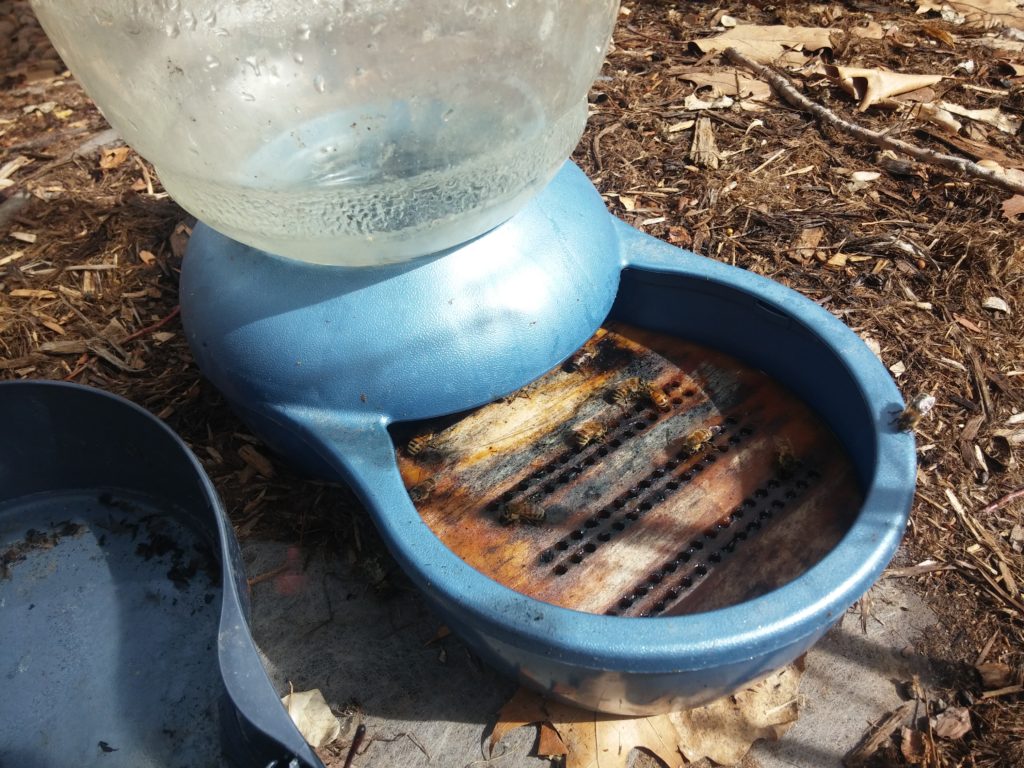
Keeping a feeder out during winter can certainly help your own bees. However I had an interesting observation today. I can see bees flying away from the feeder in 3 distinctly separate headings. This would indicate that 3 distinctly separate bee colonies which are not my own are visiting the feeder. I will need to map out the headings and return flight times.
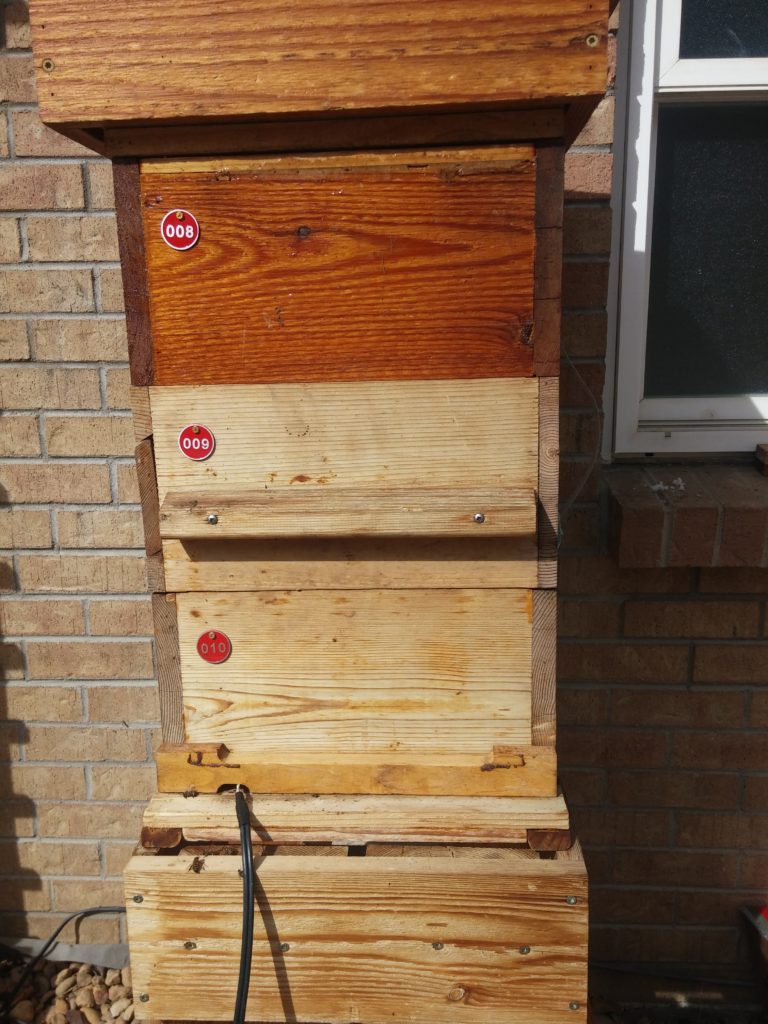
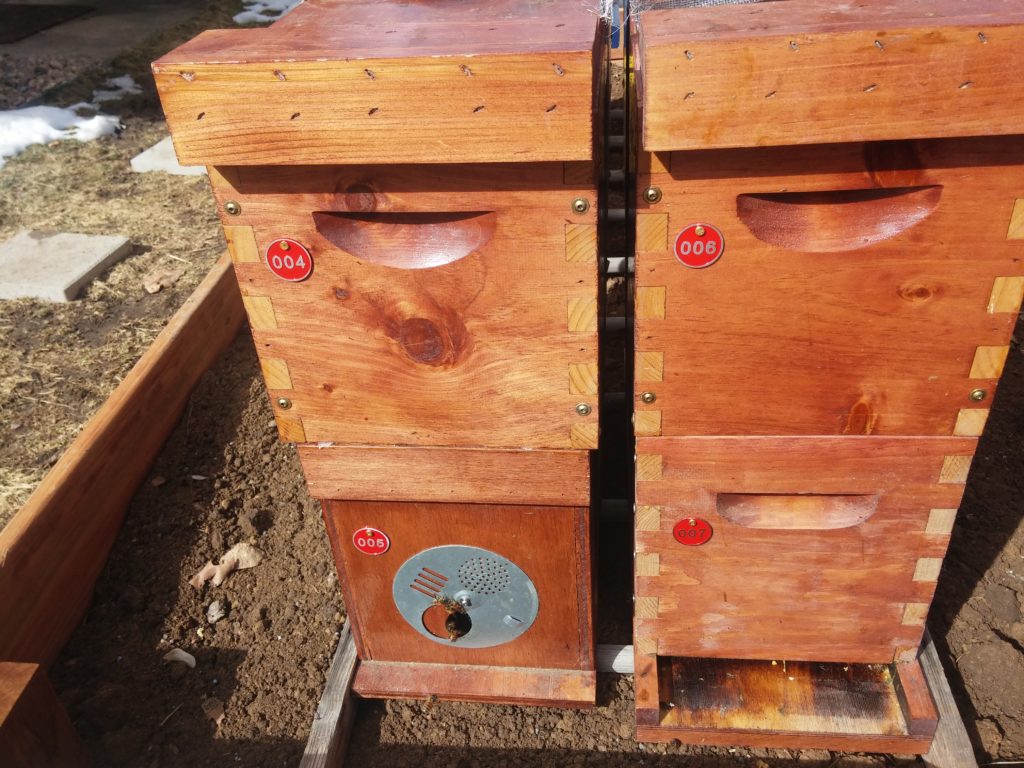
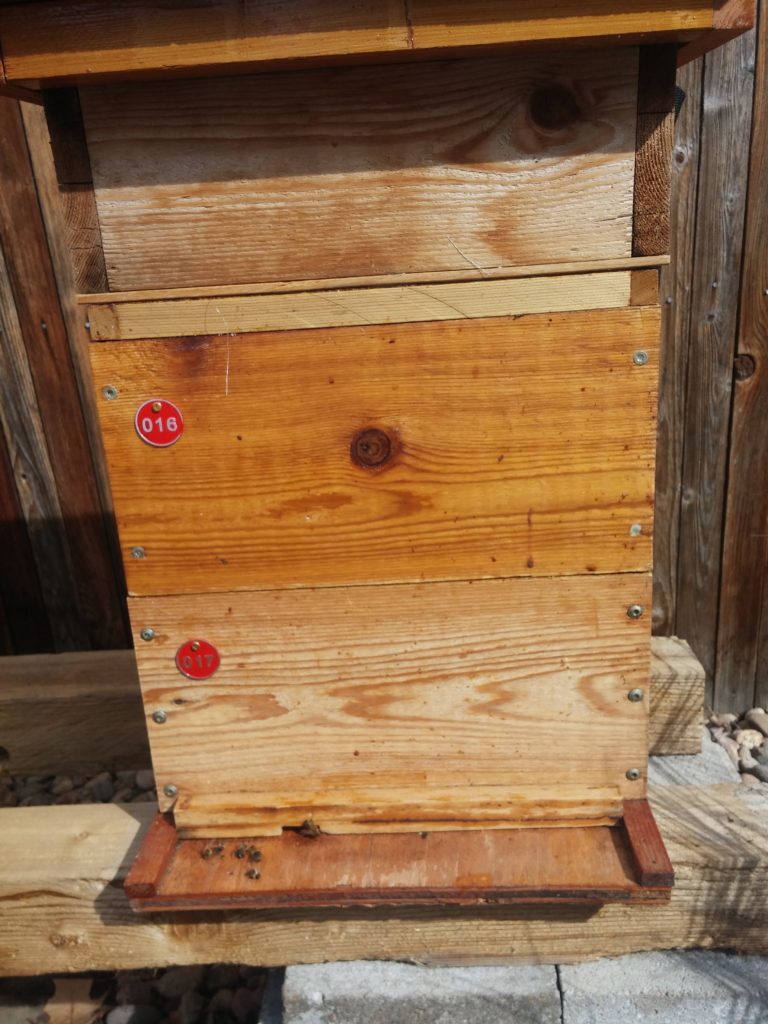
We are almost through the worst of February. This month has been truly nasty. The backyard colonies are doing well and now have number plates.
Colony (06-07) has a serious worker bee shortage problem. This colony will not be able to survive the winter much longer and may not be viable for spring. We will see if we can combine them with some workers from another colony. Or perhaps we will feed them more to stimulate egg laying.
Last week saw temperatures drop from 70F to -10F in a 24 hour period. Soon after, we had approximately 10 inches of snow accumulation and temps back up into the 50F range. I stored 4 colonies indoors during this period of instability. All 4 colonies came through the process viable. The one hive that stayed outdoors remained viable as well but had about 15-20 dead bees perished in the entrance area.
A strange winter so far. I have lost 13 colonies since fall. Some of these lost colonies had absolutely no chance of making a full winter. While others which failed were in excellent health with the largest numbers and stores. The 2 most interesting surprises were a couple of 5 frame Nucs. These 2 colonies were small and going into winter without a huge supply of food. Despite my expectation, these colonies are surviving and look as though they might make it until spring. To help, I took several full honey frames from other failed colonies and added another 5 frame Nuc on top of these colonies. Thus giving them a huge amount of food directly over their brood chamber.
Other Warre colonies were given more solid sugar boards to ensure survival.